Description
Introduction – Medico-Legal Symposium for Clinicians
This medico-legal training for doctors and healthcare professionals course has been designed for clinicians who treat patients within the first 24 hours of attendance at hospital, and where situations arise requiring the clinician to consider the legal implication of their decisions. This might include issues of consent, mental capacity or illness, and confidentiality. The course also deals with the legal processes of litigation and HM Coroner inquests.
Come join us for a virtual one-day interactive symposium covering the relevant law and legal principles and hear from our experts how they approach matters faced by staff on a daily basis.
Who is the Medico-legal Symposium for?
- Trainees and Consultants in Emergency Medicine, Acute Medicine and indeed all specialties who deal with patients in the first 24 hours of presentation to hospital.
This course is designed for clinicians working in acute specialties who:
- manage patients and who oversee a service with responsibility for dealing with system partners such as HM Coroner, the Police and litigation departments
- who deal with patients presenting with conditions requiring assessment of capacity, application of mental health assessment, safeguarding or deprivation of liberty.
The symposium will be delivered by:
- A Consultant in Emergency Medicine, who is also Deputy Medical Director of a large acute NHS Trust and who has significant experience in the law as applied to medicine.
- A Qualified Solicitor who is Head of Legal Services for a large acute NHS Trust, having extensive experience in Coronial Inquests, Civil Litigation, Mental Heath Law and Court of Protection Applications.
Course content
Content will include the following and will be taught in a case-based interactive format with slide presentations and live polls.
- Introduction to the Law and how it interacts with medical practice
- Patient confidentiality and disclosure of confidential information (to the Police)
- Coronial Inquests and how to minimise ‘criticism’ and adverse findings
- Clinical Negligence, maintaining the duty of care and what to ensure is documented
- Mental capacity and mental health, refusal of treatment and when it is permissible to treat without consent
Format
Programme
08.45-09:00 Introduction and Plan for the day
09.00-09:30 What is the Law?
- The English Legal System – Statute & Common Law
- Standards of Proof
- Criminal vs Civil vs Coronial
- Statutory agencies who hold doctors to account
- Human Rights Act 1998
09:35-10:45 Confidentiality
- What is Confidentiality?
- How are doctors held to account
- The penalties for breaching confidence
- When and how to lawfully breach confidence
10.45-11.05 Break
11.05-12:05 HM Coroner
- The role of HM Coroner
- When to make a referral and when not
- Coronial Investigation and submission of evidence
- The Inquest
- Criticisms, adverse findings and concerns – how to avoid
- Regulation 28 reports to Prevent Future Deaths
12:05-12:35 Lunch Break
12:35-12:50 Recap
- Opportunity to go over issues arising from the morning session
12:50-13:45 Clinical Negligence
- The four pillars of Negligence
- Liability and Indemnity
- Common themes in Negligence claims
- How to avoid being sued!
- How to deal with claims when they arise
- How to defend (or admit) liability
13:45-14:40 Mental Capacity (MCA 2005)
- The law of capacity
- Pitfalls and traps
- The patient who does not consent
- Treating without consent
- Advance directives
14:40-15:00 Break
15:00-15:50 Mental Health (MHA 1983)
- The law of Mental Health
- Invoking the MHA in ED
- How & why a detained patient is different
- Treatment in the absence of consent
- Depriving a person of their liberty
- How the HRA 1998 applies to the MHA 1983
15:50-16:40 The law and the Child
- What is a child?
- Laws to consider when dealing with children
- Safeguarding and child welfare
- Whose best interests – the parent or the child?
- Adolescent autonomy, consent and competence
16:40-17:00 Recap and Close
- Opportunity to go over issues arising from the afternoon session
Faculty

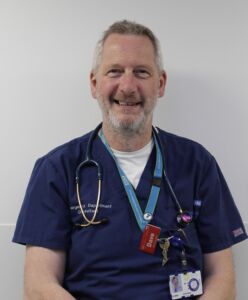
Mr. David Kirby MRCS FRCEM LLM
Course Director
David completed higher specialist training in the East of England before being appointed as a Consultant in Emergency Medicine at Luton and Dunstable University Hospital in 2008, with dual accreditation in Adult and Paediatric Emergency Medicine. He was subsequently appointed Clinical Director in 2012 and Deputy Medical Director in 2015. During his time in senior leadership, the Luton and Dunstable became the lead Trust nationally for the delivery of the four-hour Urgent and Emergency Care (UEC) standard.
David has been involved in medico-legal work since 2016, following an invitation to attend a particularly challenging inquest on behalf of the Trust. This experience highlighted the complexities of explaining the nuances and pressures of clinical decision-making to legal professionals, who may have hours to scrutinise decisions that clinicians had only seconds to make. It also reinforced the importance of ensuring that clinical practice is understood in its proper context within legal proceedings.
During his time as Deputy Medical Director, David regularly attended Coronial Inquests where his Trust was an interested party. Representing the Trust, he provided evidence to HM Coroner in a way that supported the investigation while helping bereaved families understand the circumstances surrounding their loved one’s death. He continues to undertake this work and regularly provides evidence in court.
In 2017/18, David was invited to speak at the HM Coroners’ Officers Continuation Training, a national programme providing continuing professional development for Coroners’ Officers. Following the success of this presentation, he was invited the following year by the Judicial College to deliver teaching to Coroners themselves. He had the distinction of lecturing to almost every Coroner in England during sessions chaired by HHJ Mark Lucraft KC, then Chief Coroner of England and Wales.
Alongside his court work, David began producing independent expert reports for Coroners, providing clinical opinions on cases being considered at inquest. This has developed into an established area of practice, involving regular expert reports and the provision of live evidence under cross-examination. His experience includes a wide range of serious cases, including those involving Article 2 of the European Convention on Human Rights, such as deaths in prison and police custody.
David also undertakes clinical negligence expert work for both claimants and defendant NHS Trusts, frequently instructed by panel solicitors. His approach is balanced and independent, recognising and defending reasonable clinical practice while identifying deficiencies where these should be acknowledged. He currently produces approximately 15–20 expert reports each year, giving him considerable insight into the nature of clinical negligence claims and the recurring themes and allegations arising in Emergency Medicine litigation.
Alongside his NHS clinical career and independent medico-legal practice, David studied at the University of Manchester, where he was awarded a Master of Laws (LLM) in 2022. His dissertation, *The Interface Between Law and Medicine*, was awarded a Distinction.
David continues to combine his clinical expertise with his medico-legal work and is regularly invited to teach on medico-legal matters to a wide range of audiences, including clinicians, legal professionals and police officers.

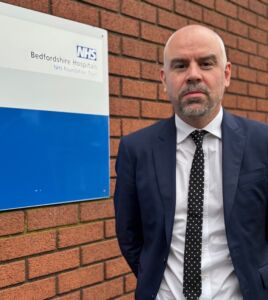
Mr Tim Smith , LLB (Hons), LPC
Head of Legal Services Bedford Hospitals NHS Foundation Trust
Tim is a qualified solicitor and has over 10 years experience within legal services in the NHS, delivering all aspects of legal support to clinicians and executives.
After spending a number of years at a large tertiary centre in the Midlands, Tim is currently the Head of Legal Services at Bedfordshire Hospitals NHS Foundation Trust. Here he oversees all Coronial investigations, litigation and clinical negligence claims, Court of Protection matters, safeguarding and mental heath detention advice.
Tim also led on one of the largest ever group action of cases brought against an NHS trust, and has legally represented Trusts on numerous complex Article 2 inquests involving multiple witnesses, liaising with HM Coroner, Counsel and other IP’s.
His philosophy is to work closely with clinicians involved in the inquest process, to provide advice and support in preparation for attendance at inquest and also support staff in what is undoubtedly a very difficult time. He regularly provides in-house talks on inquest process and clinical negligence claims to identify areas of learning in order to support patient safety developments.